

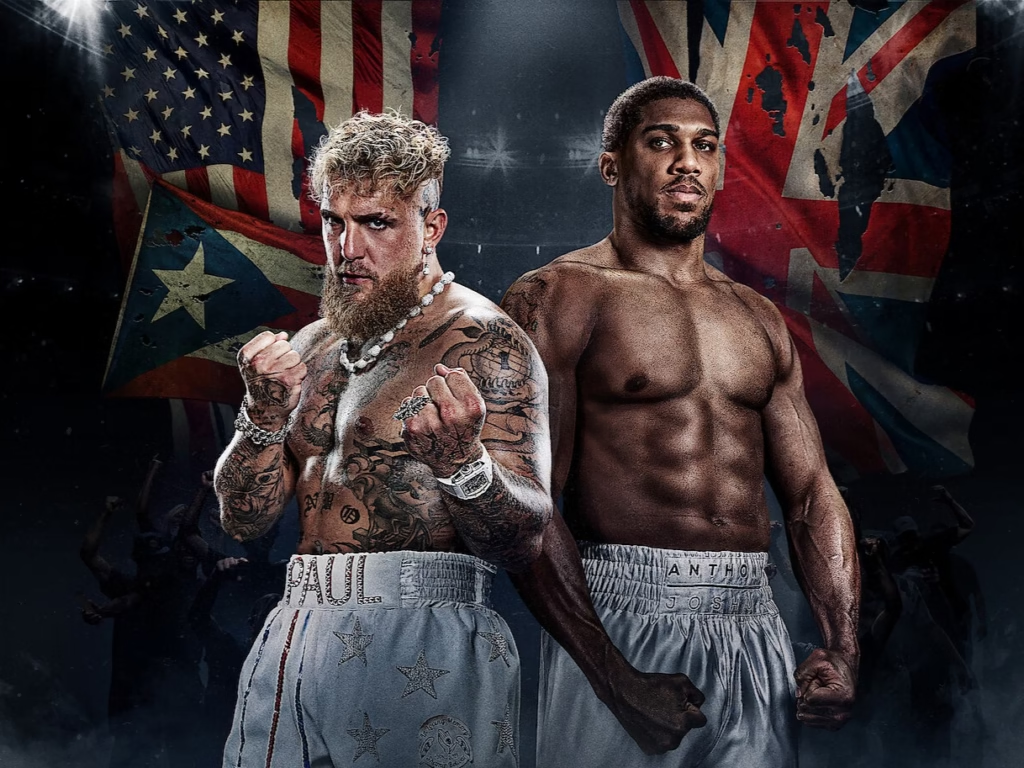
The boxing world is buzzing about one of the richest fights in history. Jake Paul and Anthony Joshua are set to clash on December 19, 2025, and the money involved is staggering. We’re talking about a combined purse of $184 million, with each fighter pocketing an eye-watering $92 million. Yes, you read that right.
The fight takes place at Miami’s Kaseya Centre and will stream globally on Netflix at no extra cost to subscribers. Let’s break down exactly how this financial blockbuster came together and what it means for both fighters.
The Record-Breaking $184 Million Purse
When the Daily Mail first reported the $184 million figure on November 13, 2025, many dismissed it as tabloid exaggeration. But major boxing publications, including ESPN, Sky Sports, and Sports Illustrated, quickly corroborated the numbers. The purse translates to approximately £139.5 million, making this one of the top 10 richest boxing events ever.
What’s truly remarkable is the 50/50 split. Both Paul and Joshua receive exactly $92 million each. This equal billing is almost unheard of in boxing, where the more established fighter typically commands 60-70% of the total purse.
The payment structure is also unusual. Rather than the traditional guaranteed purse plus pay-per-view points, this appears to be a flat guaranteed payment. Since Netflix subscribers don’t pay extra to watch the fight, there’s no PPV revenue to share. What you see is what you get: $92 million per fighter, before any additional sponsorships or endorsements.
Eddie Hearn, Joshua’s promoter, put it bluntly: this deal pays Joshua “50 times more money” than the low-key tune-up fight originally planned for December. When you’re earning that much more, apparently, you can overlook the whole equal billing thing.
Why This Fight Commands Such Massive Money
Jake Paul’s transition from YouTube celebrity to legitimate boxing draw has been nothing short of extraordinary. His November 2024 fight with Mike Tyson pulled in 108 million global viewers on Netflix. That’s not a typo. One hundred and eight million people tuned in to watch a 27-year-old influencer fight a 58-year-old legend.
Netflix clearly saw those numbers and decided to double down. The streaming giant paid DAZN a substantial buyout fee to release Joshua from his exclusive contract for this one fight. They’re betting that Paul versus a proper heavyweight champion will shatter even the Tyson viewership records.
Anthony Joshua brings his own considerable value to the table. He’s a former unified heavyweight champion, 2012 Olympic gold medallist, and has accumulated roughly £380 million ($500+ million) across 32 professional fights. His name still carries weight in boxing circles, and his September 2024 fight with Daniel Dubois drew massive attention despite the devastating loss he suffered.
The timing is perfect, too. Paul’s original December opponent, Gervonta Davis, pulled out after domestic violence allegations surfaced on November 3, 2025. Within two weeks, this Joshua fight was finalised. When opportunity knocks with $92 million in hand, you answer quickly.
The fight format seems to be an entertainment-first approach. Eight rounds with 10-ounce gloves and a 245-pound weight limit for Joshua suggest this is structured more like a spectacle than a traditional championship bout. Joshua will likely weigh around 245 pounds while Paul typically fights between 200-230 pounds, creating a significant size disadvantage that has critics questioning the competitive legitimacy.
Most boxing experts predict a comfortable Joshua victory. Former UFC champion Michael Bisping summarised the prevailing view: “It’s a win-win for Jake Paul, and it’s a lose-lose for Anthony Joshua. However, both men are going to make $92 million each. So, forget my opinion, who gives a damn?”
How This Compares to Boxing’s Biggest Paydays
The Paul-Joshua purse is massive, but it doesn’t quite crack the all-time top spots. Floyd Mayweather’s 2017 bout with Conor McGregor generated $662.5 million in total revenue, with Mayweather earning $223.5 million and McGregor taking home $70 million. His 2015 fight with Manny Pacquiao generated approximately $500 million in combined revenue.
Among recent heavyweight fights, only the Tyson Fury vs Oleksandr Usyk series compares. Their December 2024 rematch featured a total purse of $190 million, with Usyk earning $105 million and Fury receiving $85.95 million. Those Saudi Arabia-backed events represent boxing’s new financial ceiling for traditional championship credentials.
Jake Paul’s previous career-high was $40 million from the Mike Tyson fight. This Joshua payday more than doubles that. For Joshua, his biggest single fight remains the December 2019 Andy Ruiz Jr. rematch in Saudi Arabia, where he earned $88.5 million. This nearly matches that career peak.
What’s striking is that Paul, with just 12 professional fights and an 11-1 record, is earning the same as a former unified champion with 32 fights.
That tells you everything about how boxing economics are changing.
Netflix’s entry into live boxing is fundamentally changing how fights get made and fighters get paid. The streaming platform’s 230+ million global subscribers provide a ready-made audience that dwarfs traditional pay-per-view buys. Instead of hoping enough people pay $69.99 to watch, Netflix includes the fight with standard subscriptions and banks on subscriber retention and growth.
This model offers fighters enormous guaranteed paydays without the uncertainty of PPV performance. Paul and Joshua don’t have to worry about promotional tours convincing people to buy. The money is guaranteed regardless of viewership, though Netflix obviously expects massive numbers based on the Tyson fight’s success.
That’s perhaps the most honest assessment. Whatever happens in the ring, both fighters walk away with generational wealth from a single night’s work. Joshua faces catastrophic reputational risk if he loses, but that’s a risk worth $92 million. Paul has everything to gain and little to lose beyond the physical beating most expect him to receive.