

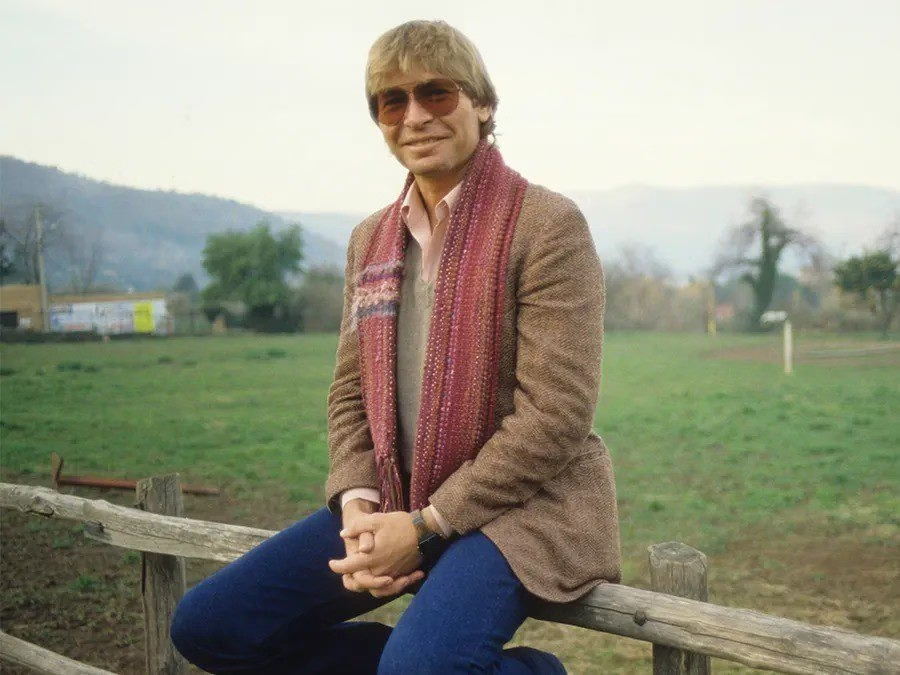
Picture this: a young lad from New Mexico with a 1910 Gibson guitar, destined to become one of America’s most beloved folk singers. That’s precisely the story of John Denver – a man whose heartfelt melodies touched millions of lives across the globe.
Quick Facts About John Denver
| Full Name | Henry John Deutschendorf Jr. |
| Stage Name | John Denver |
| Born | 31st December 1943, Roswell, New Mexico |
| Died | 12th October 1997 (aged 53), Monterey Bay, California |
| Occupation | Singer-songwriter, musician, environmental activist |
| Genres | Folk, country, pop, rock |
| Active Years | 1964 – 1997 |
| Net Worth | $60 million (at time of death) |
| Famous Songs | “Take Me Home, Country Roads,” “Rocky Mountain High,” “Annie’s Song” |
Biography
Born on New Year’s Eve 1943 in Roswell, New Mexico, Henry John Deutschendorf Jr. was destined for something extraordinary. His father, Henry John Sr., was an Air Force pilot, which meant the family moved about quite a bit during John’s childhood.
The magic began when John was just 12 years old. His grandmother gifted him a 1910 Gibson acoustic guitar that would become his constant companion. Little did anyone know that this simple gesture would spark a musical revolution!
After attending Texas Technological College (now Texas Tech University) from 1961- 64, John made a bold decision that would change everything – he dropped out before completing his studies. Sometimes the best adventures begin when you throw caution to the wind, don’t they?
In 1965, he packed his bags and headed to the Big Apple. After successfully auditioning for the Chad Mitchell Trio, he began his professional music journey. It was during this time that record executives convinced him to change his surname to “Denver” – partly honouring the Colorado capital and its surrounding Rocky Mountains that he absolutely adored.
Early Career
Denver’s first taste of real success came through a song that would become a classic. In 1967, the legendary Peter, Paul, and Mary recorded their composition “Leaving on a Jet Plane,” which soared to number one in 1969. Talk about a career-launching moment!
After signing with Mercury RCA Records in 1969, Denver released his debut solo album, “Rhymes & Reasons.” Whilst it garnered moderate success, it was just the beginning of something spectacular.
The breakthrough came in 1971 with the million-selling single “Take Me Home, Country Roads” – a song that would become West Virginia’s unofficial anthem and one of the most recognisable tunes in American music history.
The Golden Years
The 1970s were absolutely magical for Denver. With his wholesome good looks, crystal-clear tenor voice, and down-to-earth appeal, he became folk music’s golden boy. His concerts sold out stadiums nationwide, and his albums flew off the shelves.
Key Albums from Denver’s Peak Years:
- “Poems, Prayers & Promises” (1971) – Featured the iconic “Take Me Home, Country Roads”
- “Rocky Mountain High” (1972) – The title track became Colorado’s official state song in 2007
- “Back Home Again” (1974) – Included beloved tracks “Annie’s Song” and “Thank God I’m A Country Boy”
- “Windsong” (1975) – Continued his commercial dominance
Denver’s success was absolutely phenomenal:
- 14 gold albums and 8 platinum albums
- Over 33 studio albums released throughout his career
- Nearly 300 songs written and recorded
- “John Denver’s Greatest Hits” (1973) became one of the best-selling albums of all time with over 9.4 million copies sold
Beyond the Music
Denver wasn’t content with just conquering the music world. In 1977, he made his film debut in “Oh, God!” alongside the legendary George Burns. Whilst his acting career remained primarily focused on television specials, he continued to explore this creative outlet throughout his life.
Notable Appearances:
- “Oh, God!” (1977) – Film debut
- “John Denver and the Muppets” (1980) – Television special
- “The Christmas Gift” (1986) – Television special
- “Walking Thunder” (1997) – His final film role
Environmental Activism
Denver’s love for nature wasn’t just lyrical – it was deeply personal and actionable. He co-founded the Windstar Foundation in 1976, a wildlife preservation organisation that reflected his commitment to environmental causes.
Key Environmental Achievements:
- Founded the World Hunger Project in 1977
- Personally appointed by President Jimmy Carter to the Commission on World and Domestic Hunger
- Received the Presidential World Without Hunger Award from President Ronald Reagan in 1987
- Member of numerous organisations, including the Cousteau Society and Friends of the Earth
Personal Side
In 1967, Denver married Annie Martell of St. Peter, Minnesota. She became the subject of one of his most beautiful compositions, “Annie’s Song,” which he famously wrote in just 10 minutes whilst sitting on a Colorado ski lift. Pure magic, really!
The couple adopted two children – Zachary John and Anna Kate. Denver once said, “I’ll tell you the best thing about me. I’m some guy’s dad; I’m some little gal’s dad.” Unfortunately, career demands and the pressures of sudden fame led to their divorce in 1982.
Denver married Australian actress Cassandra Delaney in 1988 after a two-year courtship. They had a daughter, Jesse Belle, but divorced in 1993. Denver later reflected that the marriage was short-lived and troubled.
Aspen Years
Denver’s love affair with Colorado wasn’t just professional – it was deeply personal. After the success of “Rocky Mountain High,” inspired by a camping trip with Annie and friends, he purchased a home in Aspen, where he lived until his death.
Denver had a stunning 7,735-square-foot house custom-built on 2.6 wooded acres in Aspen during the early 1970s. The 5-bedroom, 5-bathroom retreat perfectly blended modern comforts with a natural, woodsy feel – large windows showcased gorgeous mountain views that inspired countless songs.
Property Timeline:
- 1970s: Custom-built during Denver’s career peak
- 1997: Sold for $3.68 million after Denver’s death
- 2019: Listed again for $11 million, maintaining its rustic charm
Today, visitors can experience Denver’s Aspen through the John Denver Sanctuary, a 4.5-acre environmental masterpiece nestled in the heart of Aspen. The Song Garden features the iconic singer’s lyrics etched into native river boulders arranged in a perfect circle, symbolising the circle of life.
Tragic End
Denver’s love of flying was second only to his passion for music. He was an experienced pilot with over 2,700 hours of flight time and owned several aircraft, including vintage biplanes and a Learjet.
On 12th October 1997, Denver died when his experimental Rutan Long-EZ aircraft crashed into Monterey Bay near Pacific Grove, California. The National Transportation Safety Board determined that the crash was caused by Denver’s inability to switch fuel tanks during flight due to the aircraft’s unusual fuel selector valve configuration.
Key Findings:
- Denver was not legally permitted to fly due to previous DUI convictions
- The crash was not alcohol-related (autopsy confirmed no substances in his system)
- Inadequate transition training and poor cockpit design contributed to the accident
Net Worth and Financial Legacy
At the time of his death in 1997, John Denver had amassed an impressive $60 million net worth – a testament to his incredible success across multiple decades. However, his financial legacy extends far beyond that initial figure, with his estate continuing to grow substantially in the years following his passing.
As of 2025, John Denver’s estate is estimated to be worth approximately $200 million – more than tripling in value since his death. This extraordinary growth demonstrates the enduring power of his musical legacy and the wise stewardship of his intellectual property.
Key Growth Factors:
- Ongoing royalties from iconic songs like “Take Me Home, Country Roads” and “Rocky Mountain High”
- Licensing agreements for film, television, and advertising use
- Continued album sales and streaming revenue
- Brand recognition and cultural impact maintaining commercial value
- Strategic estate management by legal advisors and trustees
How Denver Built His Fortune
Primary Income Sources:
- Record Sales: Over 30 million albums sold worldwide, with “John Denver’s Greatest Hits” alone earning over $12 million
- Concert Tours: Sold-out stadium shows worldwide generating massive touring revenue
- Licensing and Royalties: His songs continue earning substantial revenue through films, commercials, and cover versions
- Songwriting: Royalties from other artists recording his compositions
- Real Estate: Strategic property investments, particularly his conservation-focused holdings
Record Sales Breakdown (Selected Highlights)
| Album | Year | Copies Sold | Revenue |
|---|---|---|---|
| John Denver’s Greatest Hits | 1973 | 9.4 million | $12.2 million |
| Back Home Again | 1974 | 3.1 million | $4.0 million |
| An Evening with John Denver | 1975 | 3.04 million | $3.95 million |
| Windsong | 1975 | 2.08 million | $2.7 million |
| Rocky Mountain High | 1972 | 2.1 million | $2.73 million |
Where Denver’s Millions Went
Unlike many celebrities, Denver’s spending habits reflected his environmental and humanitarian values rather than flashy materialism.
Major Investments and Assets:
Real Estate Holdings:
- Windstar Land Conservancy – 450-acre environmental sanctuary in Aspen valued at $5-8 million during his lifetime
- Evergreen, Colorado home – Shared with second wife Cassandra Delaney, estimated at $2 million
- Primary Aspen residence – The famous 7,735-square-foot custom home on 2.6 acres
Transportation Collection:
- Cessna 185 Skywagon – Single-engine aircraft for recreation and concert travel
- Vintage 1960s Ford pickup truck – Reflecting his down-to-earth lifestyle
- Harley-Davidson motorcycle – For his adventurous spirit
- Learjet – For professional touring (purchased in 1974)
Philanthropic Investments: Denver allocated significant portions of his wealth to charitable causes, particularly through his Windstar Foundation and various environmental initiatives. This commitment to giving back may have reduced his personal wealth but multiplied his lasting impact.
Awards and Recognition
Denver’s trophy cabinet was absolutely brimming with accolades recognising his musical talent, humanitarian efforts, and environmental activism.
Major Music Awards
Country Music Association:
- Entertainer of the Year (1975)
- Song of the Year for “Back Home Again” (1975)
American Music Awards:
- Favourite Pop/Rock Male Artist (1975)
- Favourite Country Album for “Back Home Again” (1976)
- Favourite Country Male Artist (1976)
Other Notable Recognition:
- Emmy Award for Outstanding Variety, Music or Comedy Special (1975)
- Grammy Award for Best Musical Album for Children (1997)
- Songwriters Hall of Fame inductee (1996)
- Poet Laureate of Colorado (1974)
Humanitarian Awards
- Albert Schweitzer Music Award (1993) – For humanitarian efforts
- Presidential World Without Hunger Award (1987)
- NASA Public Service Medal (1985)
Enduring Legacy
More than 25 years after his death, John Denver’s influence remains enduring. His music transcends generations, with songs like “Take Me Home, Country Roads” remaining beloved anthems that bring people together.
Following Denver’s tragic death, the management of his estate was entrusted to a team of legal advisors and trustees, ensuring the continued success of his musical and environmental legacy.
Estate Beneficiaries: Denver’s estate was passed down to his children – Zachary (Zak) Denver and Jesse Belle Denver from his two marriages. The family has worked tirelessly to preserve John’s memory and continue his contributions to both music and environmental causes.
Factors That Affected His Wealth
Whilst Denver’s success was extraordinary, several personal and professional factors influenced his net worth throughout his life:
Challenging Financial Periods:
- Divorce settlements from two marriages affected his liquid assets
- Legal battles created ongoing financial obligations
- Philanthropic commitments prioritised giving over personal wealth accumulation
- Environmental investments often took precedence over profit-maximising opportunities
Continuing Revenue Streams: Despite these challenges, Denver’s music catalog remains one of its most valuable assets. Songs like “Take Me Home, Country Roads” and “Rocky Mountain High” generate substantial ongoing royalties, ensuring his estate continues to benefit from his creative genius decades after his passing.
Remembering a True American Icon
John Denver was far more than just a musician – he was a storyteller, environmentalist, humanitarian, and genuine soul who used his platform to spread joy and promote positive change. Has a $60 million net worth, but his true wealth lies in the countless lives he touched through his music and activism.
From that 12-year-old boy with a 1910 Gibson guitar to the folk legend who made the Rocky Mountains sing, Denver’s journey reminds us that authentic passion, combined with talent and dedication, can indeed move mountains.
His legacy continues through the John Denver Sanctuary in Aspen, the ongoing environmental work of organizations he founded, and most importantly, through the timeless songs that still bring smiles to faces and tears to eyes around the world.
As Denver himself once said, “My purpose in performing is to communicate the joy I experience in living.” Mission accomplished, John. Mission accomplished.
Want to experience John Denver’s Aspen for yourself? Visit the John Denver Sanctuary next to Rio Grande Park, where his lyrics are etched in stone and his spirit lives on in the Colorado mountains he loved so dearly.