
Jorge Messi, Lionel Messi’s Father and Longtime Agent, Dies at 68
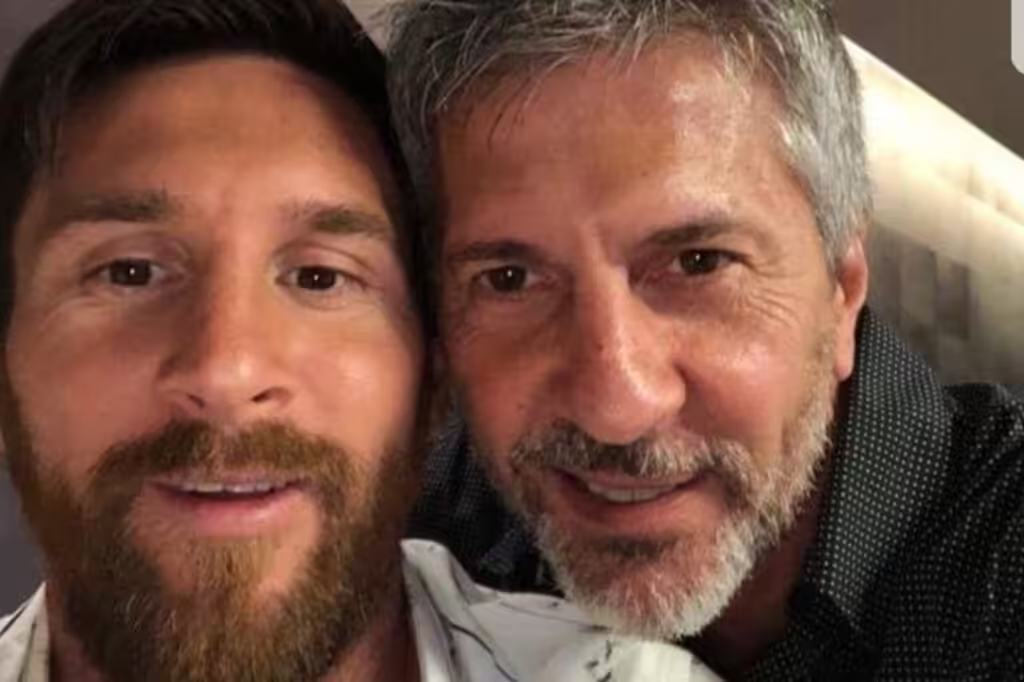
The football world is mourning the death of Jorge Messi, father and longtime agent of Argentine superstar Lionel Messi, who died early Saturday, August 8, 2026, at the age of 68. Jorge passed away at a medical clinic in his hometown of Rosario, Argentina, following months of declining health that first became public during this year’s World Cup. For nearly three decades, he was far more than a father to the game’s greatest player, serving as manager, negotiator, and the steady hand who guided a small boy from a working class Rosario neighborhood to the top of world football.
The Death and the Tributes That Followed
Jorge died in the early hours of Saturday morning at Sanatorio Centro, the Rosario clinic where he had been receiving treatment. Dr. Carlos Mackey, the hospital’s medical director, confirmed the passing in a statement and said no further details about the cause would be released, citing patient privacy rules and the family’s wishes.
His decline had already drawn public attention months earlier. During Argentina’s World Cup opener against Algeria in June, Lionel became emotional after scoring and later said his tears had nothing to do with football, describing a stretch of difficult days at home. The Messi family soon confirmed Jorge was dealing with a health issue, saying he was “recovering and evolving favorably,” and pushed back firmly against unverified reports circulating at the time that claimed he had already died.
News of Jorge’s death spread quickly across the sport, drawing statements from clubs, federations, and players connected to the family over the decades. Newell’s Old Boys, the Rosario club where a young Lionel first learned the game, called Jorge “the pillar” behind his son’s career and thanked him for passing down a lifelong love of the club. FC Barcelona, where Jorge helped arrange his son’s move as a teenager, thanked him for entrusting the club with Lionel’s formative years, while CONMEBOL, the Argentine Football Association, and Inter Miami each issued condolences. The AFA ordered a minute of silence at matches nationwide, with players, coaches, and referees wearing black armbands in his memory, and UNICEF, where Jorge had long supported children’s causes tied to Lionel’s role as a Goodwill Ambassador, also sent its condolences.
Gestures continued on the field as well. In Inter Miami’s Leagues Cup match against Monterrey hours after the news broke, teammate Rodrigo De Paul held up a number 10 jersey after scoring, and tennis great Rafael Nadal was among the sports figures outside football who sent messages of support to Lionel.
Messi’s Return to Rosario
Inter Miami left Lionel out of the Monterrey match entirely, granting him compassionate leave to travel home. He departed Fort Lauderdale on a private flight with his wife, Antonela Roccuzzo, landing in Rosario Saturday night under heavy security before heading straight to the family home to be with his mother and siblings. Lionel had not issued a public statement as of Saturday night, though his feelings about his father have surfaced before. In a 2007 interview, long before the trophies piled up, he said simply that his dad was always by his side. Inter Miami said it would give him as much time as he needs before he returns to the team.
The Messi family is keeping Jorge’s wake and burial strictly private at El Prado, a private cemetery on the outskirts of Rosario, with the farewell expected to take place Sunday. Only close family and a small circle of friends are expected to attend, with no public ceremony planned and no access for fans inside the grounds. Even so, well-wishers began gathering outside the cemetery within hours of the news, leaving flowers and paying quiet respects from a distance. Newell’s Old Boys canceled its weekend activities, including a scheduled match, as a mark of respect for a family that has been tied to the club for generations.
Who Was Jorge Messi
Jorge Horacio Messi was born in 1958 in Argentina’s Santa Fe province and grew up in Rosario’s Las Heras neighborhood, the same working class area where he met a young Celia Cuccittini. The two married in June 1978 and settled into a modest life, with Jorge working as a section supervisor at Acindar, a steel manufacturing plant, while Celia split her time between factory work and cleaning houses. The couple raised four children together: Rodrigo, Matías, Lionel, and María Sol. Jorge also coached at a small local club called Grandoli, where he first put a ball at his youngest son’s feet, later saying the family never imagined it would become anything more than something the boy simply loved doing.

Everything changed when Lionel was diagnosed with a growth hormone deficiency around age ten. The treatment was expensive and long term, more than Newell’s Old Boys or the family could sustain on their own, and it was Jorge who went looking for a club willing to help cover it. That search led him to Barcelona, where he took a young Lionel for the trial that opened the doors to La Masia, the club’s famed academy. The move split the family across continents for years, with Celia and the other children staying behind in Rosario while Jorge and Lionel built a new life in Spain, a sacrifice Jorge later described candidly in interviews.
From there, Jorge stepped fully into the role of agent, negotiating contracts and overseeing the business side of a career that produced eight Ballon d’Or awards, a World Cup title with Argentina in 2022, and stops at Barcelona, Paris Saint-Germain, and now Inter Miami. Lionel led Argentina back to the World Cup final this past July, falling to Spain, in a tournament forever marked by his father’s failing health in the background.
The Family He Leaves Behind
Jorge is survived by his wife of nearly five decades, Celia Cuccittini, and their four children. Rodrigo and Matías both went on to work closely on Lionel’s career and business affairs, María Sol holds a senior role at The Messi Store, and Lionel carries the family name into football history. He also leaves behind several grandchildren, including Lionel’s three sons with Antonela Roccuzzo.
For a man who spent decades managing one of the biggest names in sports, Jorge rarely sought attention of his own, staying largely in the background even as his son became a global icon. Saturday’s outpouring of tributes made clear how much that quiet, steady presence meant to the people who watched him build it.
Related Articles
 Brock Lesnar Retires From WWE: Career Earnings, Greatest Moments, and What’s Next
 Nana Patekar Dies at 75 After Cardiac Arrest in Goa
 Nigerian Evangelical Giant Rev. Uma Ukpai Dies at 80
 “Without Acting I Would Have Been a Misfit” — Annie Hall Icon Diane Keaton Dies at 79
 Highest Paid Nigerian Footballers (2025)
 Mark Wahlberg Scores $37 Million Florida Estate at $8M Discount