

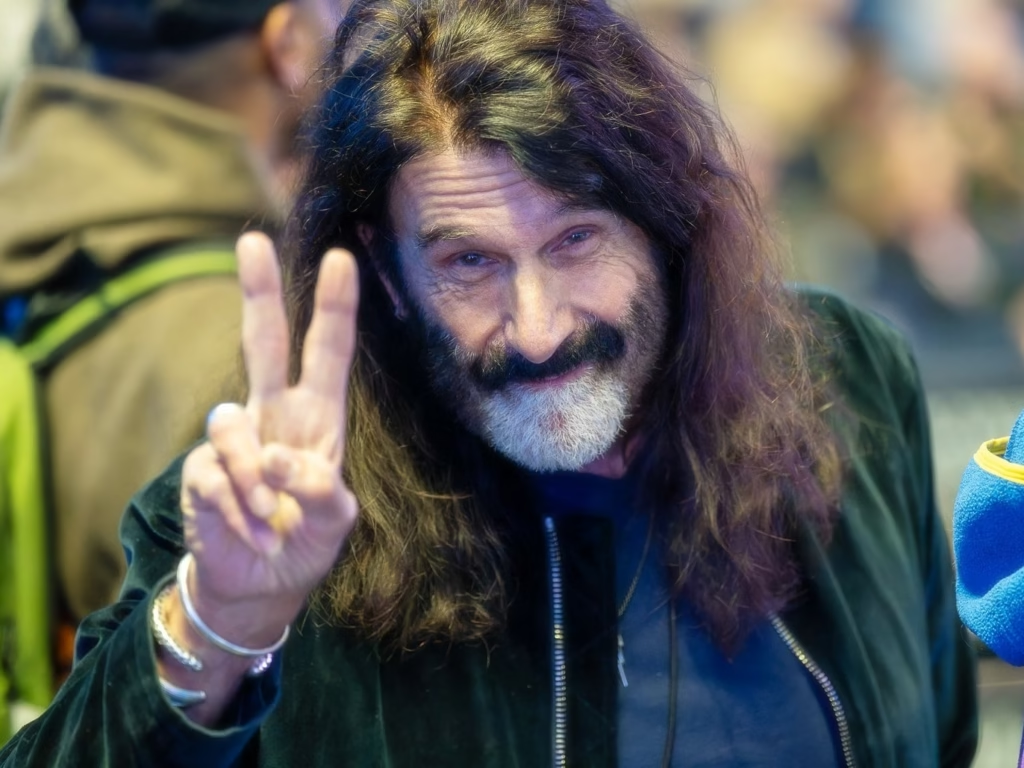
Philadelphia lost one of its most cherished cultural icons on October 29, 2025, when legendary WMMR radio DJ Pierre Robert was found deceased at his home in Gladwyne, Pennsylvania. The 70-year-old broadcaster, whose warm voice and signature “Greetings Citizens!” greeting had been woven into the fabric of Philadelphia life for 44 years, failed to show up for his midday shift that Wednesday morning, prompting a welfare check that confirmed the devastating news.
No foul play was suspected, though the exact cause of death has not been publicly released. For millions of Philadelphians, Robert greeted them every afternoon with infectious enthusiasm and an unshakeable love for rock and roll that turned casual listeners into lifelong devotees.
Early Life and Career
Born William Pierre Robert on August 1, 1955, in Truckee, California, the future Philadelphia icon grew up in the Lake Tahoe region as the son of motel owners who exposed him to the shifting cultural landscape of late-1960s and early-70s rock.
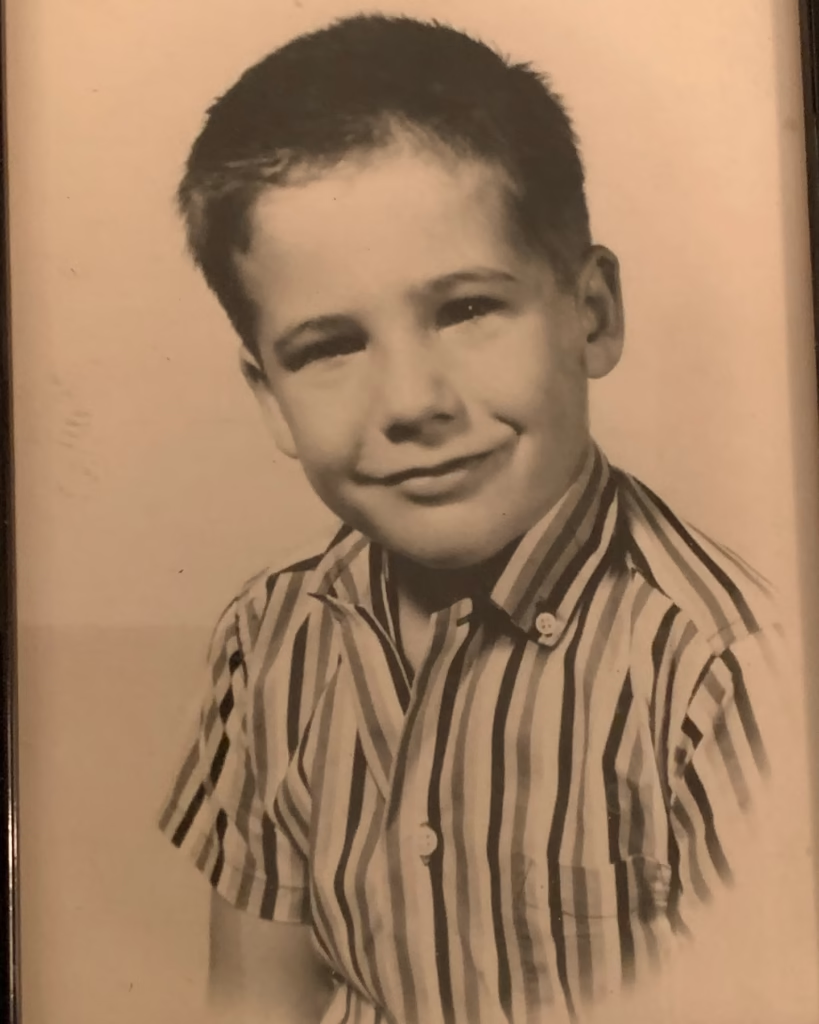
Like countless kids, he watched The Beatles’ first appearance on The Ed Sullivan Show in 1964 and got a “horrible polymer fabric” Beatles wig. He attended thousands of concerts with his parents at Lake Tahoe casino shows, soaking in the music.
After attending broadcasting school in San Francisco, Robert landed at KSAN-FM (94.9), one of America’s pioneering progressive rock stations, where free-form radio thrived. At KSAN, DJs could play “Beethoven, African chanting, the Beatles—whatever,” Robert recalled. When the station flipped to country format around 1980, he briefly adopted the on-air name “Will Robertson” because he was “morally opposed to the new format.”
That moral stand led to his most fateful decision, driving cross-country to Philadelphia in a 1970 Volkswagen van named “Minerva” with bald tyres.
“I came because of a relationship. I was in love,” he told The Philadelphia Inquirer in 2024. “The love part didn’t work out, but the job part did.” After initially being rejected by WMMR, Robert took a job loading 50-pound sacks of brown rice at Essene, a health food store on South Street. Three months of manual labour left him questioning his Philadelphia gamble until a palm reader on South Street told him, “You’re gonna get a letter very soon.” That letter from WMMR station manager Joe Bonnadonna was waiting at home.
His actual job interview happened during a Hooters concert at the Chestnut Cabaret, beginning a 44-year love affair with both the band and the city. He started at $3.50 per hour in the music library, quickly moved to overnight shifts, then morning drive-time in 1982, and finally settled into the midday slot in 1996, where he remained for 29 years until his death.
Broadcasting style
Robert’s broadcasting style defied the corporate radio playbook. Even as consolidation homogenised American radio, he maintained creative control, taking musical risks and championing artists based on passion rather than chart position.
His signature features became Philadelphia institutions: “Noontime Workforce Blocks” played 3-4 songs by the same artist at listeners’ request; “Pierre’s Vinyl Cut” unearthed treasures from WMMR’s archives; and “On This Day” segments dove deep into music history.
But it was his Christmas Eve marathon that he truly displayed his curatorial genius.
For hours, he’d blend traditional holiday songs with rock-based chestnuts, peppered with audio snippets from The Honeymooners, Cheech & Chong’s “Santa Claus and His Old Lady,” and heartwarming montages welcoming Delaware Valley residents home for the holidays.
On Thanksgiving, he’d spin all 18 minutes and 20 seconds of Arlo Guthrie’s “Alice’s Restaurant” multiple times.
His interview list reads like a rock and roll hall of fame: Mick Jagger, Jon Bon Jovi, Dolly Parton, Bruce Springsteen, U2, The Who, Foo Fighters, Pearl Jam, and countless others. Yet he was equally passionate about supporting local acts. “He didn’t care if you were the fad or the fashion of the moment. He just cared,” Jon Bon Jovi wrote in his tribute. The Hooters drummer, David Uosikkinen, said simply, “I never met a DJ like him. We got so close. We vacationed once together.”
Robert was inducted into the Philadelphia Music Alliance Walk of Fame in 2019 alongside The Hooters, and in 2021, WMMR renamed its main studio the “Pierre Robert Studio” to celebrate his 40th anniversary. In January 2024, at age 68, he signed a multi-year contract extension. “To paraphrase the Grateful Dead: What a long, strange, and wonderful trip it’s been… and still is!” he said at the signing.
Private Life
Pierre Robert was famously private about his personal life, with no publicly confirmed spouse, partner, or children. His most well-known companion was Lucy, his beloved golden retriever, who died about a decade ago. When Lucy developed orthopaedic issues around 2010, Robert brought her to work, ensuring she received chiropractic care, acupuncture, and water therapy. Her death in 2012 from multiple organ failure prompted a tearful on-air tribute where he called dogs “magical creatures.” He later named his boat after her.
Robert lived in Gladwyne, an affluent Philadelphia suburb, but his heart belonged to Rittenhouse Square, which he called his “favourite place in the region.” He described “a peaceful magic dome over Rittenhouse Square” where you could “see the world go by.” His final Instagram post, just two days before his death, showed him there with a book and a cup of La Colombe coffee. A perfect snapshot of the man who loved simple pleasures.
Known for “Pierre Standard Time,” Robert was perpetually late to everything, a quirk that became endearing to colleagues and listeners. He was a voracious reader of spy novels and sci-fi, a vegetarian since age 21, and utterly uninterested in sports. He famously called every Philadelphia team “The Boys in Blue” regardless of their actual colours, joking about his “wafer-thin sports knowledge.”
His charitable work was extensive and heartfelt. He hosted AIDS Walk Philadelphia annually, co-founded and promoted Manna’s Pie in the Sky fundraiser (raising over $2 million for hunger relief since 1999), and used his platform to champion Jon Bon Jovi’s homelessness initiatives. Caroline Beasley, CEO of Beasley Media Group, noted that “Pierre’s generosity was unparalleled.”
Death
The morning of October 29, 2025, started like any other Wednesday at WMMR, until Pierre Robert didn’t show up for his 11 a.m. shift. Colleagues requested a welfare check, and police found him deceased at his Gladwyne home. He was 70 years old.
The circumstances surrounding his passing remain unclear, with no foul play suspected and no cause of death publicly released.
Just days earlier, he’d attended a Hooters concert at the Keswick Theatre, appearing healthy and engaged. He’d been active on social media through late October, posting about attending the Metropolitan Opera.
That Wednesday afternoon, WMMR’s Preston and Steve emotionally took to the air during what should have been Pierre’s shift to announce the heartbreaking news.
The station spent the day playing his favourite songs as a tribute. That night, Bryan Adams dedicated his song “Heaven” to Robert during a concert at Xfinity Mobile Arena, revealing he’d been scheduled for a 15-minute Zoom interview with Pierre that very day. The venue projected “In Loving Memory” with Robert’s image on its sign.
Net Worth
Various online sources estimate Pierre Robert’s net worth at approximately $5 million at the time of his death, though this figure should be treated as speculation rather than confirmed fact.
Unlike syndicated national radio personalities, Robert’s career was rooted in the Philadelphia market, where veteran hosts in top markets can earn substantial six-figure salaries but rarely accumulate the vast wealth associated with television or national syndication.
With 44 years of tenure at WMMR, multiple contract extensions, and the station’s recognition of his irreplaceable value (including renaming their studio in his honour), Robert likely earned at the upper end of the scale for regional radio talent. This would have provided a comfortable, upper-middle-class lifestyle consistent with his residence in Gladwyne, an affluent Philadelphia suburb.
However, as multiple analysts noted, radio hosts like Pierre Robert “often earn modestly compared to national media figures, but their cultural value is immeasurable.”
His true wealth wasn’t captured in bank statements; it was part measured in the $2 million+ he helped raise for Manna’s Pie in the Sky hunger relief efforts, the countless local artists he championed into success, and the 44 years of joy, comfort, and musical discovery he brought to millions.
