

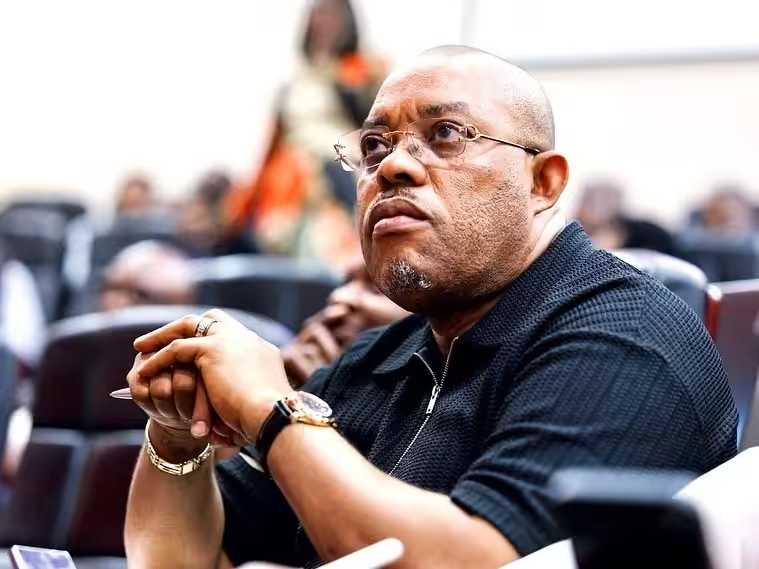
Alex Alozie is one of Nigeria’s most seasoned banking executives, with over two decades of experience spanning some of the continent’s largest financial institutions. Best known for his expertise in digital transformation and large-scale operations, he made headlines in March 2026 when Signature Bank Nigeria appointed him Deputy Managing Director, a move widely seen as a bold statement of the bank’s ambitions. Few banking professionals in Nigeria can claim to have shaped both the corporate and regulatory sides of the industry the way Alozie has.
| Nationality | Nigerian |
|---|---|
| Occupation | Banking executive (Deputy Managing Director, Signature Bank Nigeria) |
| Net Worth | Not publicly disclosed or verified; content offers only a rough unverified estimate in the hundreds of millions of naira |
| Education | BSc Economics, Abia State University, Uturu; MBA, Metropolitan School of Business and Management, London; Doctorate, POMA University, Benin Republic; executive education at Wharton Business School and Columbia University |
| Professional Fellowships | Chartered Institute of Bankers of Nigeria (CIBN), Nigerian Institute of Management (NIM), Institute of Chartered Economists of Nigeria, Chartered Institute of Strategic Managers and Leaders, Association of Human Resources of Nigeria |
| Career | Head of Bankwide Operations, Diamond Bank; Group Head of Digital and Centralised Operations, Access Bank; Group Head of Operations/Transformation, then Executive Director (North), then Executive Director and Group Chief Operating Officer, UBA; Deputy Managing Director, Signature Bank Nigeria (from March 2026) |
Biography
Alex Alozie’s academic journey reflects a man who never stopped investing in himself. He holds a BSc in Economics from Abia State University, Uturu, an MBA from the Metropolitan School of Business and Management in London, and a doctorate from POMA University in Benin Republic. Beyond formal degrees, he’s completed executive education programmes at two of the world’s most prestigious institutions, Wharton Business School and Columbia University, giving him a truly global perspective on finance and leadership.

His educational grounding in economics, combined with advanced international business training, laid the framework for a career defined by systems thinking and operational innovation. It’s the kind of broad academic profile that equips someone not just to manage banks, but to help redesign how they work from the inside out.
On the professional credentials front, Alozie is a Fellow of five respected bodies: the Chartered Institute of Bankers of Nigeria (CIBN), the Nigerian Institute of Management (NIM), the Institute of Chartered Economists of Nigeria, the Chartered Institute of Strategic Managers and Leaders, and the Association of Human Resources of Nigeria. That’s a rare combination of expertise spanning banking practice, economic theory, strategic management, and human capital development, all under one roof.
Career
Alozie’s banking career reads like a timeline of Nigeria’s own financial evolution. He started his senior leadership journey at Diamond Bank, one of Nigeria’s most respected retail banks at the time, where he climbed to the position of Head of Bankwide Operations. It was a role that put him at the centre of the bank’s day-to-day operational machinery, and he held it right up until Diamond Bank’s acquisition by Access Bank in 2019.
Rather than being sidelined by the merger, Alozie moved across as Group Head of Digital and Centralised Operations at Access Bank, one of the most consequential banking mergers in Nigerian history. In that role, he was tasked with harmonising two large institutions’ operational frameworks, no small feat given the scale involved. His work during this period helped Access Bank consolidate its position as one of Nigeria’s foremost commercial banks.

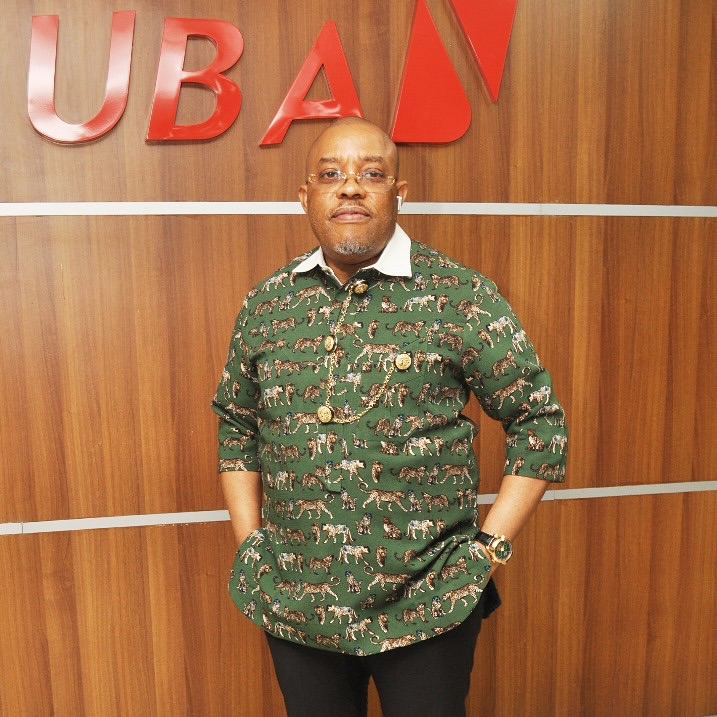
Later in 2019, he made the move to United Bank for Africa (UBA), a pan-African giant with operations in 20 countries across Africa, the United Kingdom, France, and the United States. At UBA, his ascent was swift and deliberate. He progressed through Group Head of Operations and Transformation, then to Executive Director (North), before eventually reaching the highest operational seat in the bank as Executive Director and Group Chief Operating Officer. In that capacity, he oversaw digital transformation strategy and operational efficiency across an institution serving millions of customers on multiple continents. He also served concurrently as Non-Executive Director and Chairman of UBA Pensions.
What makes Alozie’s career particularly notable is how much of it extended beyond the boardroom. He served on four Central Bank of Nigeria committees: the CBN Committee on the Cashless Policy, the CBN/NIBSS Committee on BVN Implementation, the CBN/SEC Committee on the E-Dividend Mandate, and the CBN Committee on Shared Services. These weren’t ceremonial appointments. The cashless policy fundamentally changed how Nigerians transact money daily, while the BVN initiative established biometric identity verification across the entire banking system. His fingerprints are on infrastructure that most Nigerians interact with without even knowing it.
For his contributions, Alozie received a formal commendation from the CBN for his role in the cashless initiative, a commendation from the Securities and Exchange Commission for the E-Dividend implementation, and a CBN/NIBSS Award for his work on the BVN committee. These are rare honours in an industry where regulators don’t hand out praise lightly.
He retired from UBA effective January 1, 2026, as part of a planned board transition alongside several other long-serving executives. Within weeks, Signature Bank Nigeria came calling. The bank announced his appointment as Deputy Managing Director in March 2026, pairing him with MD/CEO Nixon Iwedi and Chief Information Officer Steve Obiago to lead the institution through its next phase of growth. Together, the three bring a complementary blend of digital banking, operations, and technology expertise to a bank that has staked its future on financial inclusion and tech-driven service delivery.

Personal Life
Alozie is notably private when it comes to his personal life. Very little is publicly known about his family, relationships, or personal interests. His academic background at Abia State University in Uturu suggests strong ties to Nigeria’s South-East geopolitical zone, though this has not been officially confirmed in any public record. He has not spoken publicly about his upbringing, his family situation, or his life outside the banking world, which is fairly characteristic of many senior Nigerian banking executives who tend to keep a sharp line between their professional and private lives.
Net Worth
Alex Alozie’s net worth has not been publicly disclosed or verified by any financial publication. That said, his career trajectory gives a reasonable sense of the kind of earnings someone at his level commands in Nigeria’s banking sector.
Deputy Managing Directors and Executive Directors at major Nigerian commercial banks typically earn between ₦5 million and ₦15 million monthly, with full annual remuneration packages, including performance bonuses, allowances, and other benefits, often running into hundreds of millions of naira. At the very top, publicly filed financial statements show that Tier-1 bank CEOs have earned anywhere from ₦97 million to over ₦870 million in a single year. Executive Directors and COOs at those same institutions typically earn in a comparable, if slightly lower, range.
Given that Alozie spent several years as Group COO at UBA, one of Africa’s largest banks by assets, and now holds a deputy managing director position at Signature Bank, his career earnings over two decades are likely substantial by any measure. A conservative estimate would place his accumulated wealth comfortably in the hundreds of millions of naira, though any specific figure remains unverified. This section will be updated as credible information becomes available.
More Entrepreneurs



More Nigerian Celebrities





Related Articles
 Nigerian Billionaires Ever Listed by Forbes Till Date
 Meet the 10 Youngest Billionaires in Nigeria and How They Made Their Fortunes
 Top 10 Richest Pastors in Nigeria, Net Worth, Ministry Age (2025)
 Richest Nigerian Footballers of All Time (2026 Net Worth and Earnings Rankings)
 The 10 Richest Women in Nigeria, From Business Tycoons to Industry Leaders
 Top 10 Richest Musicians in Nigeria Ranked by Net Worth 2025
 The 10 Richest Women in Africa and How They Built Their Fortunes