

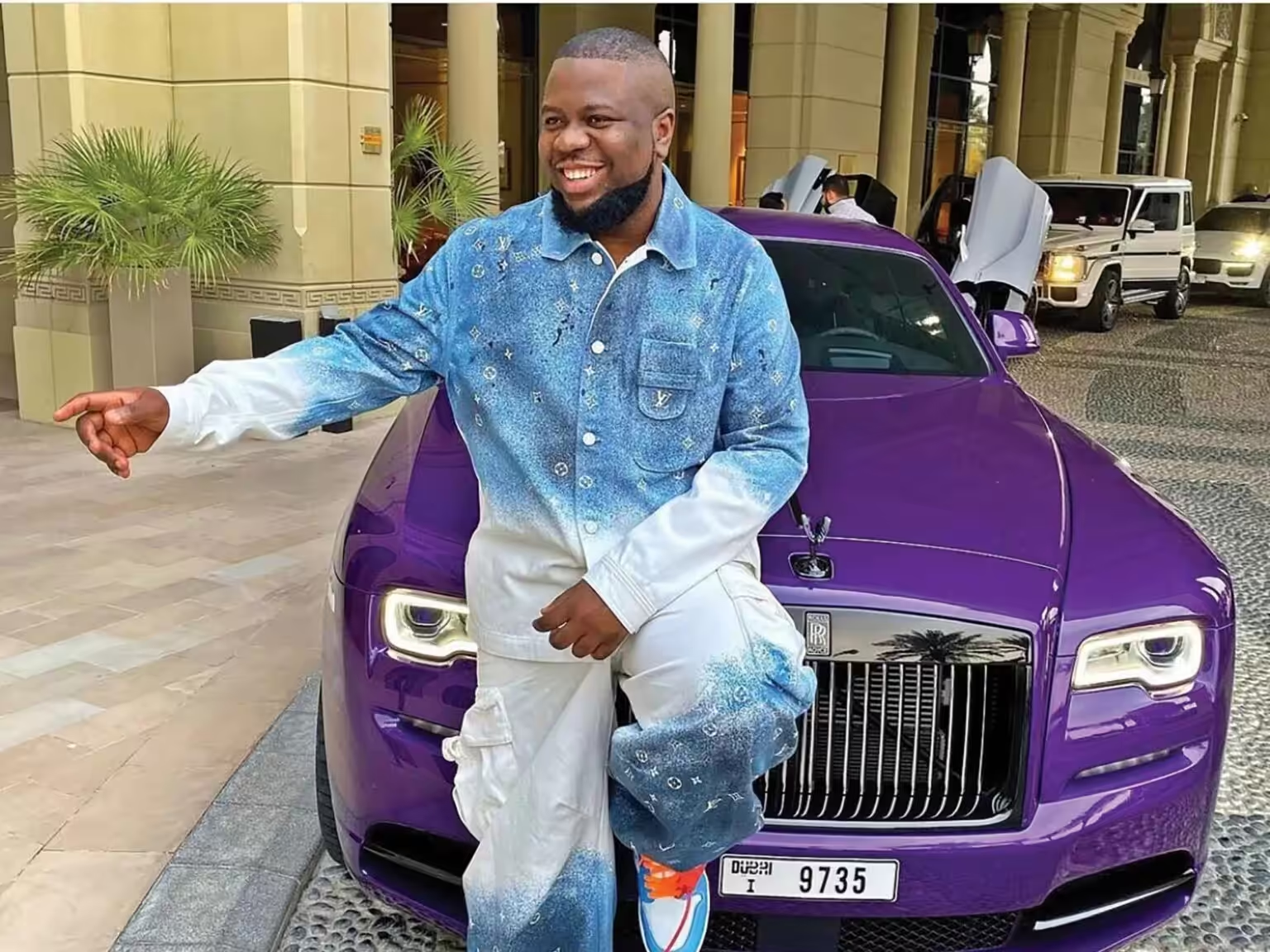
Ramon Olorunwa Abbas, better known as Hushpuppi, is a Nigerian Instagram personality whose life took a tumultuous turn. He built a striking social media presence, showcasing private jets, luxury cars, and custom designer robes to millions. Eventually, it all unraveled, and today he is in federal prison in New Jersey, serving an 11-year sentence for his role in a global money laundering operation. His meteoric rise and dramatic downfall are among the most talked-about cybercrime stories of the social media era.
| Date of Birth | October 11, 1982 |
|---|---|
| Age | 43 years |
| Nationality | Nigerian |
| Zodiac Sign | Libra |
| Occupation | Social Media Personality |
| Net Worth | Zero (previously estimated $20–$40 million before his 2020 arrest) |
| Real Name | Ramon Olorunwa Abbas |
| Ethnicity | Yoruba |
| Current Status | Incarcerated at FCI Fort Dix, New Jersey (projected release August 2029) |
Biography
Ramon Olorunwa Abbas was born on October 11, 1982, in Lagos, Nigeria. He grew up in a low-income neighborhood and came from a Yoruba Muslim family.
His father was a taxi driver, and his mother sold bread. Abbas lost an older sister due to unpaid hospital bills, a tragedy that left a deep mark and fueled his frustration with Nigeria’s limited opportunities and inadequate social systems. Growing up with these hardships, he understood from an early age that even hard work did not guarantee security or reward. These losses and financial struggles shaped his view of success and the lengths he might need to go to achieve it.
Details of his education are unclear, but reports indicate he attended Government College, Ikorodu. Around 2014, he moved to Malaysia, then to Dubai in 2017, aided by Instagram socialite Mompha. Mompha, whose real name is Ismaila Mustapha, is a well-known Nigerian businessman and influencer famous for flaunting wealth on social media. He and Hushpuppi became close friends, and Mompha is often credited with helping Hushpuppi settle into Dubai’s luxury scene and connect with other high-profile figures.

Career
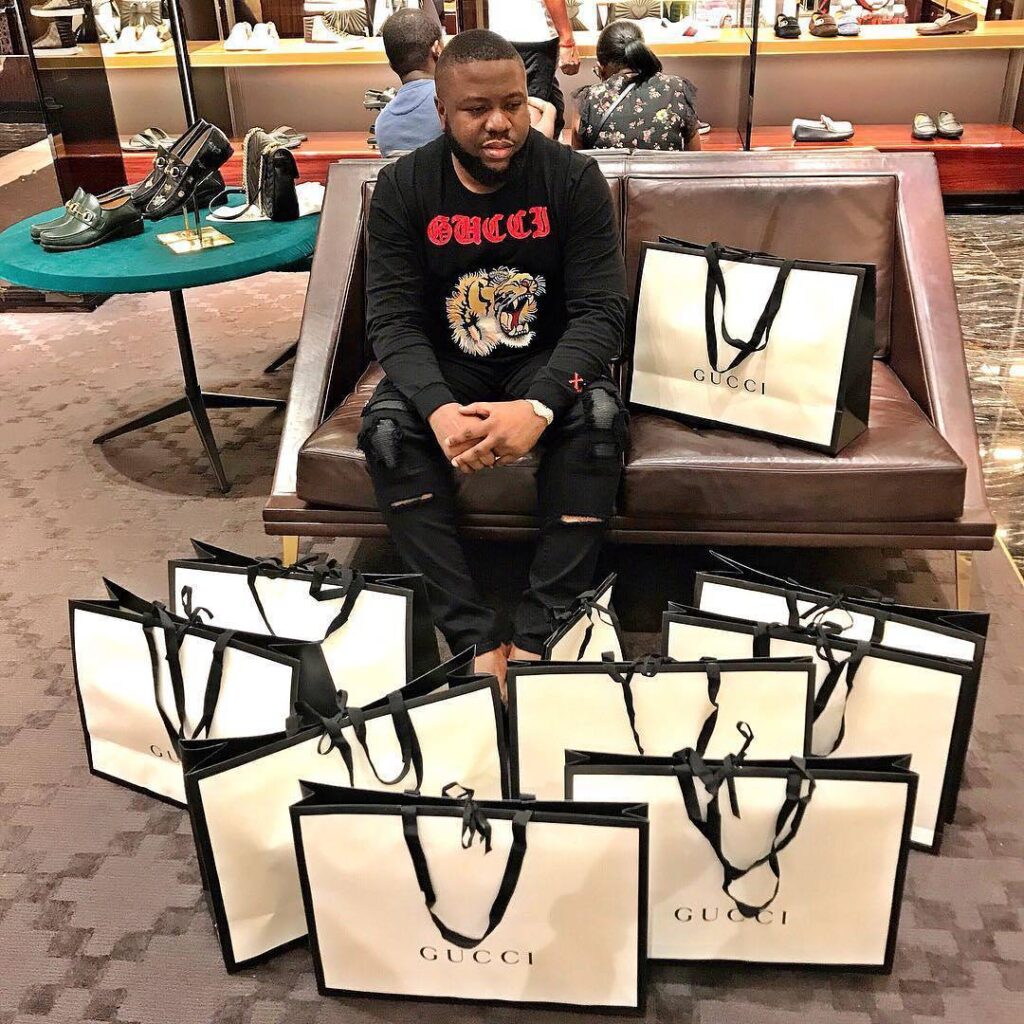
Hushpuppi began crafting his @hushpuppi Instagram persona around 2012. His move to Dubai escalated his global profile. By the time of his 2020 arrest, he had over 2.4 million Instagram followers and about 1.3 million on Snapchat. His feed was a steady parade of luxury: high-end vehicles, expensive watches, and frequent designer brand displays earned him the nickname “Billionaire Gucci Master.” Reportedly, he spent about $10,000 per month on his stay at Palazzo Versace Dubai.
On Instagram, he claimed to be a real estate developer and brand promoter, but lacked evidence of legitimate income. His 2021 guilty plea confirmed his wealth came from cybercrime.
He was also famous for feuding with celebrities. In 2017, he posted a club receipt for ₦11 million in drinks, outshining a ₦1 million receipt by singer Davido. He accused rappers Phyno and Ice Prince of wearing fake watches, sparking a public feud that inspired the 2017 hit “Telli Person” by Timaya, Phyno, and Olamide—widely seen as a warning that his extravagant lifestyle would catch up with him. Eventually, it did.
Arrest and Legal Troubles
In the early hours of June 10, 2020, six SWAT teams from the Dubai Police, working alongside the FBI and Interpol, carried out simultaneous raids on six properties in Dubai as part of the Fox Hunt 2 operation. Hushpuppi was arrested at his Palazzo Versace apartment alongside eleven others, including his close associate Olalekan Jacob Ponle, known as Mr Woodberry. What police seized was staggering: over $40 million in cash stuffed into suitcases, 13 luxury cars worth approximately $7 million, 47 smartphones, 21 laptops, and more than 800,000 email addresses of potential victims, with estimated potential losses of around $435 million foiled by the operation.
On July 2, 2020, UAE authorities handed Abbas to the FBI, and he arrived in Chicago that same evening. His lawyer at the time, Gal Pissetzky, argued the transfer amounted to a kidnapping since no formal extradition process had been followed, but the objection went nowhere.

The charges centered on business email compromise fraud, a scheme in which criminals infiltrate or mimic corporate email accounts to redirect wire payments to accounts they control. Specific schemes included tricking a New York law firm into wiring $922,857 into a criminal-controlled account, conspiring to launder $14.7 million stolen from Malta’s Bank of Valletta in a cyber-heist linked to North Korean state hackers, and involvement in a plot to steal £100 million from an English Premier League club. There was also a $1.1 million scam targeting a Qatari businessperson seeking funding to build a school, in which Abbas posed as a Wells Fargo banker. Notably, around $230,000 of those proceeds went toward buying a Richard Mille watch that later appeared prominently on his Instagram.
On April 20, 2021, Abbas pleaded guilty to one count of conspiracy to engage in money laundering. Prosecutors noted that, by his own admission, he had conspired to launder over $300 million in just 18 months. Sentencing took place on November 7, 2022, before Judge Otis D. Wright II, who imposed a 135-month (11 years and 3 months) federal prison term, plus 3 years of supervised release. He was also ordered to pay $1,732,841 in restitution to the New York law firm and the Qatari victim.
In a handwritten letter to the court before sentencing, Abbas expressed remorse, thanked the FBI, and apologized to his family. The FBI’s Don Alway described him as “one of the most prolific money launderers in the world.”
He is at FCI Fort Dix in New Jersey under inmate number #54313-424, with a projected release date of August 6, 2029. Reports of his release are false; he remains in custody as of 2026. FCI Fort Dix is a medium-security federal prison where inmates have access to educational programs, jobs, and recreation fields.
Personal Life
Hushpuppi was famously private about his relationships, rarely featuring women on his Instagram page. What is known about his personal life has largely come out through court documents.
During his 2020 detention, Abbas said he had three children by three women, living in London and New York. Some court filings reference as many as five children.

His most publicly discussed relationship was with Amirah Dyme, a German-born Instagram model with over 3 million followers. The two were regularly photographed together in Dubai, though Hushpuppi never formally confirmed the relationship on his page. Hours after news of his arrest broke in June 2020, Dyme posted a sharp public rebuke directed at him, then moved on.
His marriage to Shawana Nakesia Chapman, a U.S. and St. Kitts dual citizen from North Carolina, is more complicated. His lawyer disclosed the marriage in July 2020, and the Government of St. Kitts and Nevis confirmed he had been granted a passport through the marriage. However, U.S. court documents tell a different story: Abbas admitted in his plea agreement that he obtained St. Kitts citizenship using a falsified marriage certificate, a bribed government official, and $50,000 in stolen funds. Whether a legal marriage actually took place in 2018 remains genuinely unclear, and Hushpuppi himself never publicly acknowledged Chapman as his wife.
Net Worth
Estimates place his net worth before arrest between $20 and $40 million. Claims of a $4 billion fortune lack evidence. Forbes confirmed he never appeared on its billionaires list.
The reality is that Hushpuppi was not a billionaire sitting on a personal fortune. He was a high-volume conduit for stolen funds, passing the money through a laundering network before it reached co-conspirators. Much of what he displayed online was rented, borrowed, or financed through criminal proceeds. By the time of his sentencing, he was effectively broke. Today, in prison, his net worth is zero.
Hushpuppi’s story left a noticeable mark on both Nigerian society and global pop culture. His rise and fall intensified conversations about online fraud, locally known as ‘Yahoo Yahoo,’ and fueled debates about wealth, aspiration, and authenticity in the age of social media. For some, his Instagram posts created a glamorous image of cybercrime, sparking criticism that flashy lifestyles can easily overshadow their illegal origins. His case also influenced music, slang, and countless memes, becoming part of commentary on celebrity, internet fame, and social values in the digital era. Many true crime fans now cite his downfall as a cautionary tale about the costs of chasing viral wealth through online deception.
More Internet Personalities



More Nigerian Celebrities



More Libra Celebrities


Related Articles
 Johnny Depp Lost $721K To A Fraudster And Didn’t Even Notice
 Top 10 Richest Big Brother Naija Stars in 2025
 Top 10 Richest Musicians in Nigeria Ranked by Net Worth 2025
 Meet the 10 Youngest Billionaires in Nigeria and How They Made Their Fortunes
 Top 10 Richest Nigerian Skit Makers in 2025
 Top 10 Richest Men in Nigeria and Their Sources of Income
 Top 10 Richest Men in Africa Ranked By Net Worth