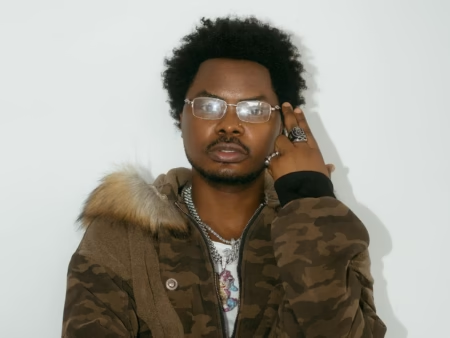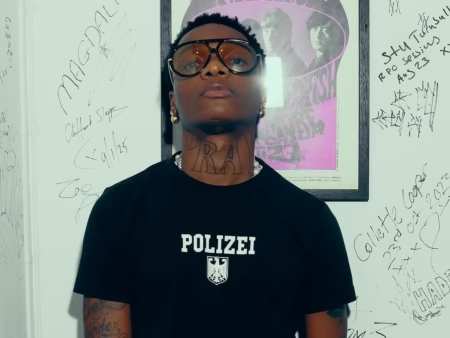

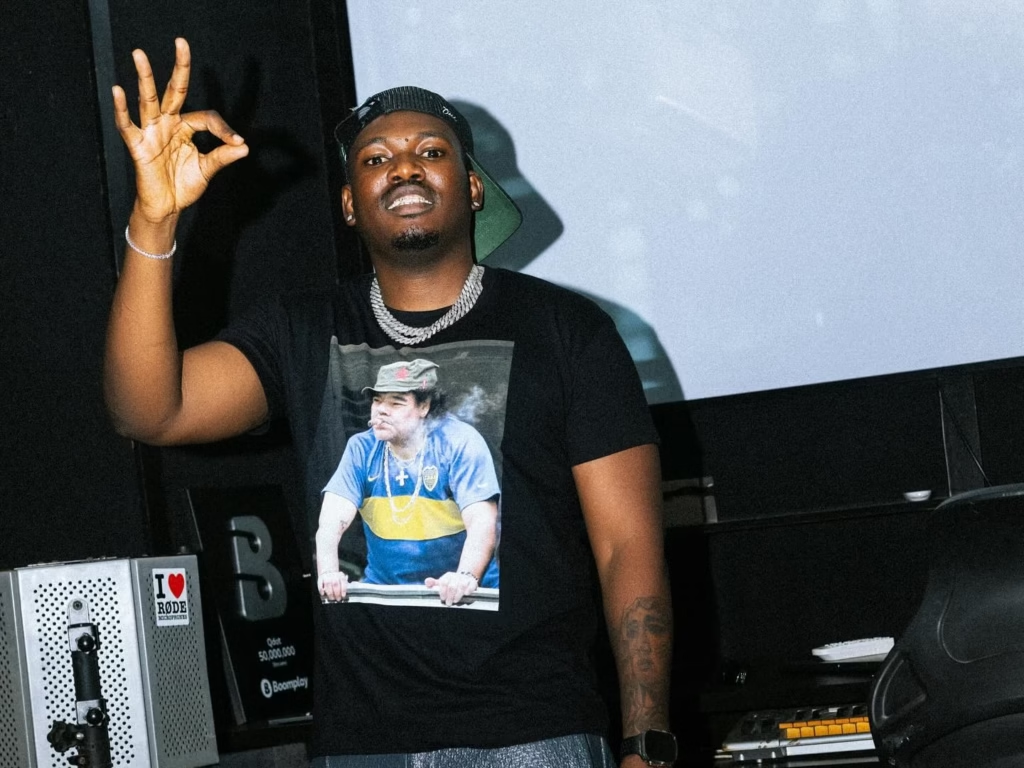
When it comes to indigenous Yoruba music in Nigeria, few artists have made as much impact as Qdot Alagbe. This Lagos-born singer has carved out a unique space in the Nigerian music industry by blending traditional Yoruba sounds with contemporary hip-hop and Afrobeat, creating something that’s both authentically African and modern.
Born Fakoya Qudus Oluwadamilare on April 30, 1988, the artist who would become known simply as Qdot started his journey in the bustling streets of Ikorodu, Lagos State. Now 37 years old, he’s built a career that spans over a decade and continues to resonate with fans across Nigeria and beyond.
Qdot Alagbe Biography
Qdot’s story begins in Ikorodu, though his roots trace back to Oyo State. He often describes himself as “half Ibadan, half Lagos boy,” and this dual identity has profoundly shaped his musical style. Growing up in these vibrant environments exposed him to the raw energy of street culture and the rich traditions of Yoruba music, influences that would later become the foundation of his sound.
His family situation was a bit complicated. He’s the first child of his father but the second of his mother, who already had a child from a previous relationship. These early experiences of navigating complex family dynamics may have contributed to the depth and authenticity in his music, particularly in songs that speak to everyday Nigerian realities.
The name “Qdot” itself carries spiritual significance. He derived it from “Qudus,” a Muslim word meaning “The Most Holy.” It’s a stage name that reflects both his cultural identity and his artistic ambitions.
Qdot’s formal education took him through United Senior High School, where his passion for music first began to take shape. During these secondary school years, he was already experimenting with rap and winning talent hunts, showing early signs of the artist he’d become. After completing his secondary education, he enrolled at Yaba College of Technology in Lagos, where he studied General Arts. This choice made perfect sense for someone already deeply invested in creative expression.
His musical influences are as diverse as they are deeply rooted in Yoruba tradition. Artists like Haruna Ishola, Ayinde Barrister, Beautiful Nubia, and even 2Face Idibia left their mark on his developing style. But perhaps his most outstanding teacher was the streets themselves, where he absorbed the rhythms, slang, and pulse of everyday Nigerian life.
Qdot Alagbe Career
Qdot’s professional music career officially kicked off in 2010 with his debut single “Story of My Life.” It was a solid introduction, but he wasn’t content with just being another voice in Nigeria’s crowded music landscape. He spent the next few years honing his craft, working with respected producers like D’tunes, Antras, Indomix, and Citi Boi, each collaboration adding new dimensions to his sound.
Then came 2013, the year everything changed. His hit single “Alomo Meta” exploded onto the scene, turning Qdot from a promising talent into a household name. The song perfectly captured what made him special: infectious melodies rooted in Yoruba tradition, street-smart lyrics, and production that made it impossible not to move. The success wasn’t just commercial either; “Alomo Meta” earned him a City People Music Award and established him as a serious force in indigenous Nigerian music.
Following the success of “Alomo Meta,” Qdot proved he wasn’t a one-hit wonder. In 2014, he dropped “Ibadan,” featuring none other than Olamide, one of Nigeria’s biggest stars. The collaboration was a strategic move that paid off handsomely, introducing Qdot to an even wider audience. That same year, he released “Ibeere” (Question), another chart-topper that came with a slick video produced by HG2.
His ability to consistently deliver hits became his trademark. In 2016, he released the party anthem “Turn Up” and followed it with “La La Lu,” a street banger featuring Lil Kesh that had everyone from Lagos to Abuja vibing. By 2017, he was dropping “Apala New School,” a track that earned massive airplay and further cemented his reputation as an innovator in the indigenous music space.
But it was “Gbese” that really pushed Qdot into another stratosphere. Released when the Zanku dance craze was taking over Nigeria, the song became an anthem that blended street slang with infectious rhythms. It showcased his ability to stay relevant and tap into current trends while maintaining his unique identity.
Throughout his career, Qdot has shared stages and collaborated with some of Nigeria’s biggest names—Seriki, Patoranking, Reminisce, Jhybo, and of course, Olamide. He even appeared on legendary Fuji artist Pasuma’s hip-hop album “My World,” contributing to the fan-favourite track “Olohun Oje.”
Initially signed to Omo Ita Entertainment, Qdot eventually decided to chart his own course. After his contract expired, he launched Yorubaboi Music, his own record label. Running his own label means he controls his creative direction and keeps more of the revenue his music generates.
Yorubaboi Music isn’t just a vanity project either. Qdot has assembled an impressive crew of 27 members, including vocalists, backup singers, stage dancers, percussionists, and instrumentalists. This substantial team allows him to deliver high-energy live performances that bring his recorded music to life.
Beyond recording studios, Qdot has made his mark through live performances. In 2016 and 2017, he hosted “Qdot and Friends” concerts in both Ikorodu and Ikeja, bringing his music directly to fans in different parts of Lagos. These events, organised by London-based promoter Billy Q Ent and sponsored by Pakotunez and Naijaloaded, weren’t just concerts—they were celebrations of indigenous music that showcased both Qdot and other talented artists.
The industry has certainly taken notice of Qdot’s contributions. In 2019, he won the City People Music Award for Best Indigenous Artist of the Year alongside fellow artists Slimcase, Mr Real, and Zlatan. The following year, in 2020, he received the OYA (Ogo Yoruba Award) for Best Indigenous Artiste, further validating his position as one of Yoruba music’s leading voices.
Over the years, Qdot has built an impressive catalogue of songs that span different moods and styles. Some of his most popular tracks include “Turn Up,” “Ijo Gelede,” “Gbese,” “La La Lu,” “Orin Emi,” “Afarawe,” “Fuel Subsidy,” “The Story,” “Ole Aare,” “Orijin,” “Alhaji,” “Apala New School,” “Emilokan,” “Jaiye,” and “German.”
Qdot Alagbe Personal Life
Despite his public profile, Qdot has kept his personal life relatively private. As of now, he’s unmarried and hasn’t shared much about his romantic relationships with the public.
Qdot Alagbe Net Worth
Success in the Nigerian music industry has been financially rewarding for Qdot. His estimated net worth stands at around $400,000 (approximately N200 million), though some estimates vary. This wealth comes from multiple streams. Album and single sales form the foundation, but he’s diversified intelligently.
His YouTube channel generates revenue through views and streams, while live performances and concerts provide substantial income. The “Qdot and Friends” concerts alone are drawing in more revenue. Collaborations with other artists bring additional fees and exposure, and as the owner of Yorubaboi Music, he keeps more of the revenue that would otherwise go to a record label.
Guest appearances, such as his feature on Pasuma’s album, contribute to his earnings, and there’s likely income from endorsements and other business ventures he keeps private.
What makes Qdot special is his commitment to elevating Yoruba music while making it accessible to contemporary audiences. He’s created what he calls an “Afrocentric” style that honours traditional sounds while incorporating modern hip-hop and Afrobeat production.
His lyrics, delivered primarily in Yoruba, speak to the experiences of everyday Nigerians, the hustle, the joy, the struggles, and the celebrations. There’s an authenticity to his music that resonates because it comes from lived experience, from growing up in Ikorodu and navigating Lagos.